Peptide Reconstitution Tutorial
Learn the correct technique for reconstituting lyophilized peptides with bacteriostatic water. Follow the steps carefully to ensure peptide stability and efficacy.
For Research Purposes Only
This tutorial is for educational and research purposes only. Always consult a qualified healthcare professional before handling or using any research peptide. Improper reconstitution may compromise peptide integrity.
Gather Your Supplies
Before starting, have all necessary materials on a clean surface:
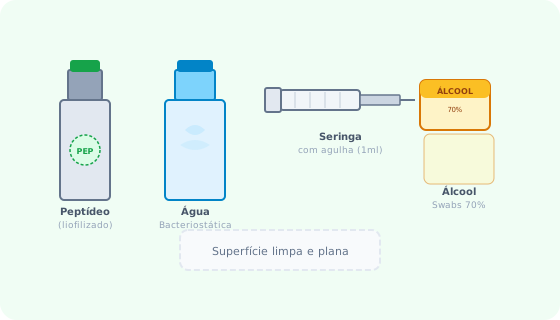
- Peptide vial (lyophilized powder)
- Bacteriostatic water vial
- Sterile syringe with needle (1ml or 3ml)
- 70% alcohol swabs
- Clean, flat surface
Clean the Vial Stoppers
Proper sterilization is essential to avoid contamination:
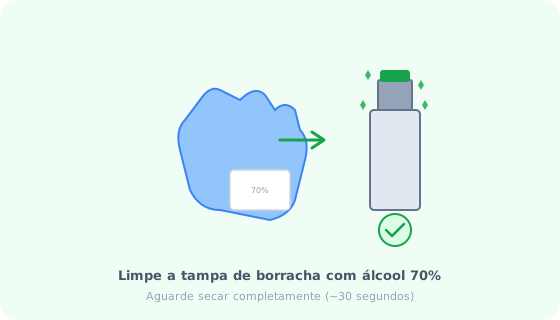
- Wash hands thoroughly or wear medical gloves
- Clean the rubber stopper of both vials (peptide and bacteriostatic water) with an alcohol swab
- Wait for alcohol to dry completely (~30 seconds)
- Do not touch the clean stoppers with your fingers
Draw the Bacteriostatic Water
Carefully measure the correct amount of bacteriostatic water:
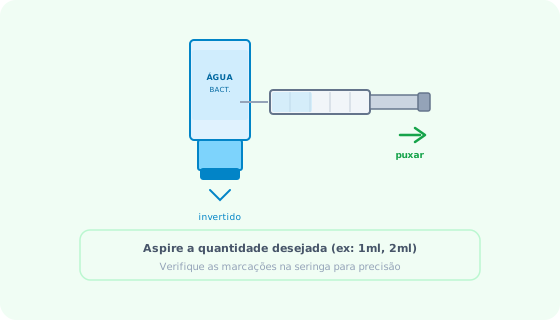
- Remove the needle cap from the sterile syringe
- Insert the needle into the bacteriostatic water vial
- Invert the vial and slowly pull the plunger to draw the desired amount (e.g., 1ml, 2ml)
- Check the syringe markings to ensure accuracy
- Remove air bubbles by gently tapping the syringe and slowly pushing the plunger
Inject Water into the Peptide Vial
This is the most critical step — inject slowly and carefully:
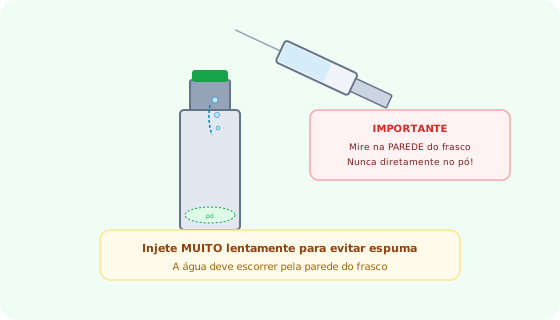
- Insert the needle into the peptide vial at a slight angle
- Direct the water stream toward the vial wall, NOT directly onto the powder
- Inject the water very slowly to avoid foam formation
- The powder should dissolve naturally as the water runs down the wall
- DO NOT shake the vial — this can damage the peptide structure
CRITICAL: Never inject water directly onto the powder or shake the vial. This can denature the peptide and render it ineffective.
Gently Dissolve the Peptide
Allow the peptide to dissolve naturally with minimal agitation:
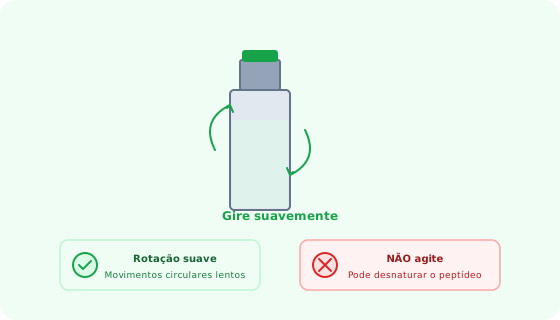
- After injecting the water, gently swirl the vial in circular motions
- DO NOT shake vigorously — use only gentle rotation
- The solution should become clear within 1–5 minutes
- If powder remains, refrigerate for 10–15 minutes and swirl again
- When fully dissolved, the solution should be clear and particle-free
Storage & Handling
Important information to maintain peptide stability
Before Reconstitution
- Store lyophilized peptides in the freezer (-20°C or colder)
- Keep protected from light and moisture
- Most peptides remain stable for 1-2 years when frozen
- Let the vial reach room temperature before opening
After Reconstitution
- Store in the refrigerator (2-8°C) immediately after reconstitution
- Most peptides remain stable for 2-4 weeks when refrigerated
- Protect from light (wrap in aluminum foil if necessary)
- Never freeze reconstituted peptides
- Label the vial with the reconstitution date and concentration
Common Mistakes to Avoid
Shaking the vial
Can denature the peptide. Use only gentle rotation.
Injecting water directly onto the powder
Aim at the vial wall to avoid foam formation.
Using regular water
Always use bacteriostatic water to prevent bacterial growth.
Freezing reconstituted peptides
Can damage the peptide structure. Refrigerate only.
Need to calculate the correct dosage after reconstitution?
Use the Reconstitution Calculator